


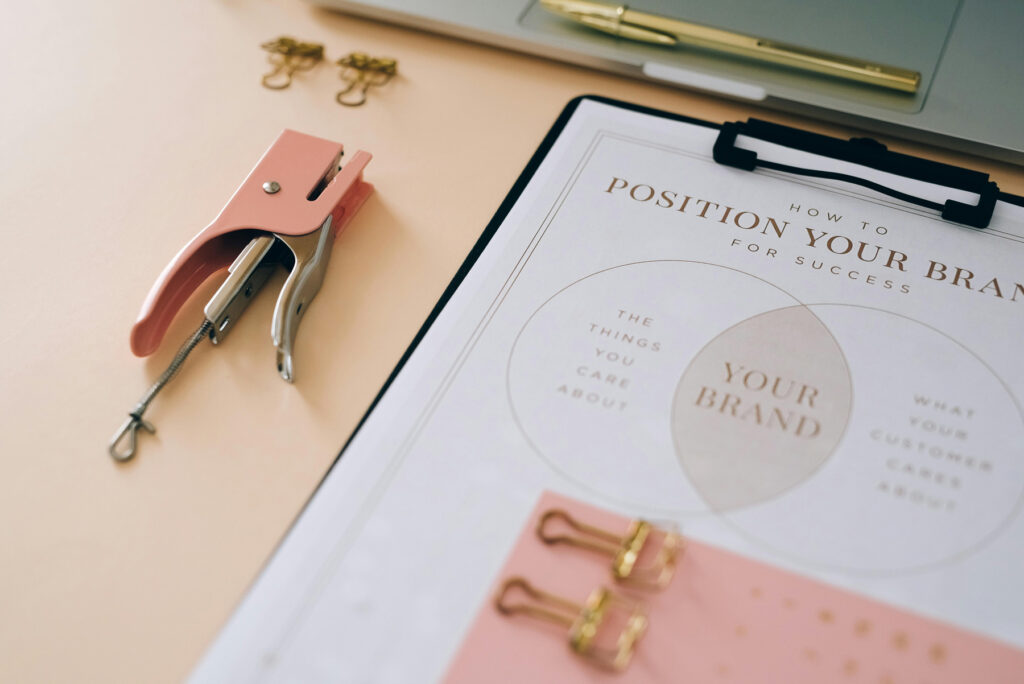
Strategic Branding vs Just Design: What’s the Difference?
When people compare strategic branding vs design, they often think the difference is subtle. After all, both involve visuals, right? However, while design focuses on how something looks, strategic branding defines what it means, how it behaves, and why it exists. And that distinction changes everything.
In fact, many businesses invest in beautiful visuals first. Yet later, they realize their brand still feels unclear, inconsistent, or hard to scale. That’s usually not a design problem. Instead, it’s a strategy gap.
So let’s clarify what really separates strategic branding from “just design”—and why it matters for your growth.
What Is “Just Design”?
Design, on its own, focuses on execution. It includes:
✔️ Logo creation
✔️ Color palettes
✔️ Typography selection
✔️ Website layout
✔️ Social media templates
And yes, these elements are important. However, without direction, design becomes decoration.
For example, you might get a logo that looks modern. You might choose trendy colors. You might build a website that feels polished. Nevertheless, if none of those decisions are connected to positioning, audience, or values, the brand remains superficial.
As a result, everything can look “good”… yet still feel disconnected.
What Is Strategic Branding?
Strategic branding, on the other hand, begins before visuals. It answers questions like:
👉🏼 Who are we really for?
👉🏼 What problem do we solve?
👉🏼 How do we want to be perceived?
👉🏼 What makes us different?
👉🏼 What emotional experience should we create?
Only after those answers are clear does design enter the conversation.
Therefore, strategic branding isn’t just about appearance. Instead, it’s about alignment. It connects:
✅ Vision
✅ Positioning
✅ Voice
✅ Story
✅ Visual identity
✅ Customer experience
Consequently, every design decision becomes intentional—not random.
Strategic Branding vs Design: The Core Difference
Here’s the simplest way to understand it:
👉🏼 Design makes things look good. Strategy makes things make sense.
👉🏼 Design asks: What should this look like? Strategy asks: Why should it look that way?
Without strategy, design is reactive. With strategy, design becomes directional.
And that shift changes how your brand performs long-term.
Why “Just Design” Often Fails Over Time
At first, purely aesthetic branding can feel enough. However, growth exposes weaknesses. For instance:
✅ Your message starts to feel inconsistent.
✅ Your audience doesn’t fully connect.
✅ Your website looks nice but doesn’t convert.
✅ Your visuals evolve, but your positioning doesn’t.
Eventually, you may think you need a redesign. In reality, what you need is clarity.
If your brand looks polished but feels unclear, you might relate to:
👉🏼 Why Your Message Isn’t Clear (and How Branding Helps)
👉🏼 Logo vs Branding: What’s the Real Difference?
Often, the issue isn’t the logo. It’s the lack of strategic foundation.
What Strategic Branding Changes
When branding is strategic, several things shift.
1️⃣ Your decisions become easier
Because your positioning is defined, choosing colors, typography, and tone becomes simpler. Instead of guessing, you filter choices through strategy.
2️⃣ Your communication becomes consistent
As a result, your website, social media, and marketing align naturally. Everything feels cohesive because it stems from the same core.
3️⃣ Your brand feels more trustworthy
Consistency builds trust. And trust, ultimately, builds growth.
4️⃣ You avoid constant rebranding
Instead of redesigning every year, your brand evolves with intention.
How to Know If Your Brand Has Strategy
You don’t need a 100-page document to know whether strategy exists. Instead, ask yourself:
🔸 Can I clearly explain who I serve and why?
🔸 Do my visuals reflect my values and positioning?
🔸 Is my tone consistent across platforms?
🔸 Do people understand what makes me different?
If these answers feel vague, that’s not failure. However, it is a signal. Your brand might have design—but not strategy.
Why This Matters for Small Businesses and Personal Brands
Especially for founders and solopreneurs, it’s tempting to prioritize visuals first. After all, design feels tangible. Strategy feels abstract. Yet ironically, skipping strategy often makes everything harder.
Without it:
- Marketing feels forced.
- Pricing feels uncertain.
- Messaging changes constantly.
However, when strategy is clear, design becomes powerful instead of decorative.
And that’s the real difference in strategic branding vs design.
Design is visible. Strategy is structural. One shapes perception. The other shapes direction.
While design attracts attention, strategy builds alignment. And in the long run, alignment is what sustains a brand.
So if your brand looks “nice” but doesn’t feel solid, don’t rush to redesign. Instead, pause and ask:
Is this a design problem—or a strategy gap?
If you want a brand that doesn’t just look good—but feels aligned, clear, and intentional—I can help. Let’s build something structured, not accidental. ✨





No responses yet